Bansky: an Artist With a Message Reading Plus Answers
/https://tf-cmsv2-smithsonianmag-media.s3.amazonaws.com/filer/The-Story-Behind-Banksy-2.jpg)
When Time magazine selected the British creative person Banksy—graffiti main, painter, activist, filmmaker and all-purpose provocateur—for its list of the globe'south 100 about influential people in 2010, he found himself in the company of Barack Obama, Steve Jobs and Lady Gaga. He supplied a picture of himself with a paper purse (recyclable, naturally) over his caput. Most of his fans don't really want to know who he is (and have loudly protested Armada Street attempts to unmask him). Simply they do want to follow his upwardly trajectory from the outlaw spraying—or, as the argot has information technology, "bombing"—walls in Bristol, England, during the 1990s to the artist whose work commands hundreds of thousands of dollars in the auction houses of Britain and America. Today, he has bombed cities from Vienna to San Francisco, Barcelona to Paris and Detroit. And he has moved from graffiti on gritty urban walls to paint on canvas, conceptual sculpture and even film, with the guileful documentary Leave Through the Gift Store, which was nominated for an Academy Award.
Pest Control, the tongue-in-cheek-titled arrangement ready by the artist to cosign the real Banksy artwork, also protects him from prying outsiders. Hiding behind a paper pocketbook, or, more ordinarily, east-postal service, Banksy relentlessly controls his own narrative. His concluding confront-to-face interview took identify in 2003.
While he may shelter behind a concealed identity, he advocates a direct connection between an artist and his constituency. "At that place'due south a whole new audience out there, and information technology's never been easier to sell [1's fine art]," Banksy has maintained. "Y'all don't have to go to college, drag 'round a portfolio, mail off transparencies to snooty galleries or sleep with someone powerful, all you need at present is a few ideas and a broadband connection. This is the first time the essentially conservative earth of art has belonged to the people. We need to brand it count."
***
The Barton Hill commune of Bristol in the 1980s was a scary role of boondocks. Very white—probably no more than than three blackness families had somehow ended up there—working-class, run-down and unwelcoming to strangers. So when Banksy, who came from a much leafier part of town, decided to go make his first foray at that place, he was nervous. "My dad was desperately beaten upward in that location as a kid," he told fellow graffiti creative person and author Felix Braun. He was trying out names at the time, sometimes signing himself Robin Banx, although this soon evolved into Banksy. The shortened moniker may accept demonstrated less of the gangsters' "robbing banks" cachet, but information technology was more memorable—and easier to write on a wall.
Effectually this time, he also settled on his distinctive stencil approach to graffiti. When he was 18, he once wrote, he was painting a train with a gang of mates when the British Send Police showed up and everyone ran. "The rest of my mates fabricated it to the car," Banksy recalled, "and disappeared then I spent over an hour hidden under a dumper truck with engine oil leaking all over me. As I lay there listening to the cops on the tracks, I realized I had to cutting my painting time in half or give it up birthday. I was staring directly upwardly at the stenciled plate on the bottom of the fuel tank when I realized I could just re-create that style and make each letter 3 anxiety high." Merely he also told his friend, author Tristan Manco: "As soon as I cut my first stencil I could feel the power at that place. I as well like the political edge. All graffiti is low-level dissent, only stencils have an extra history. They've been used to get-go revolutions and to stop wars."
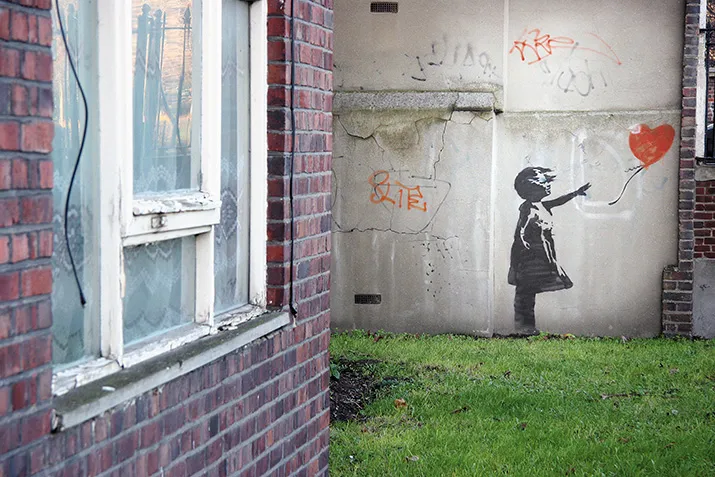
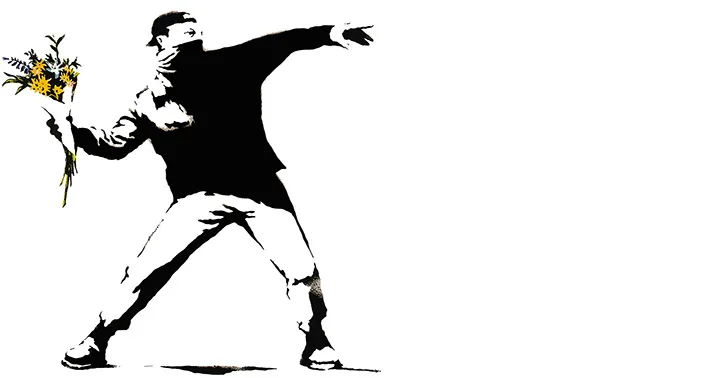
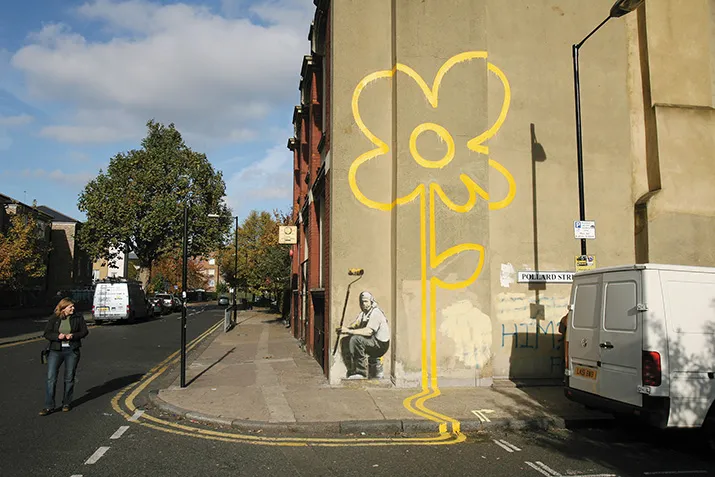
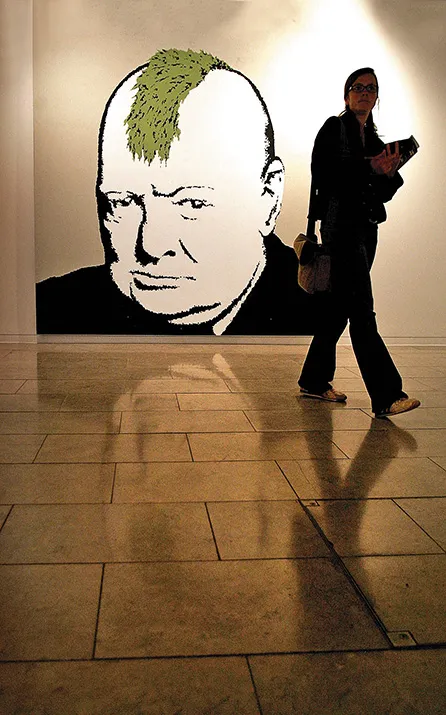
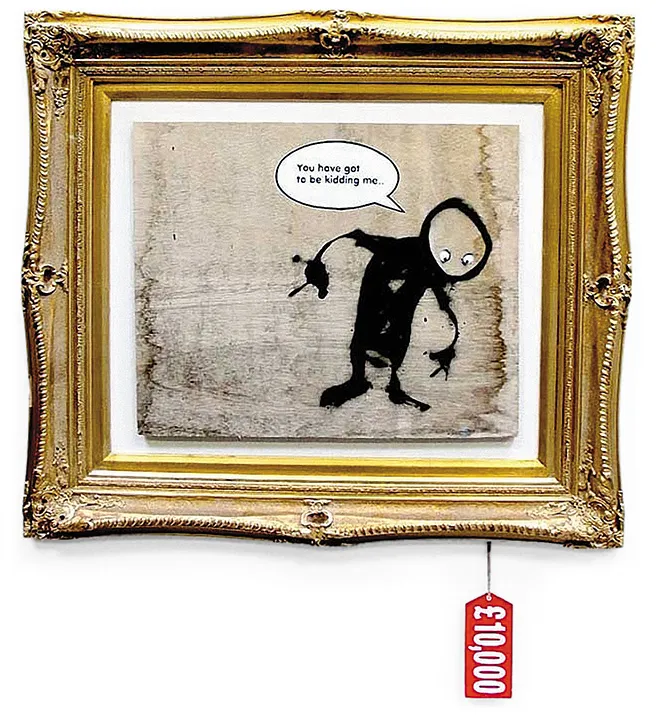
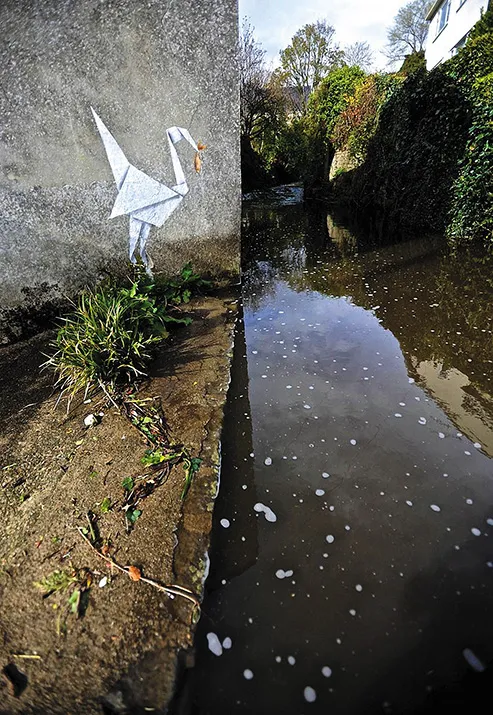
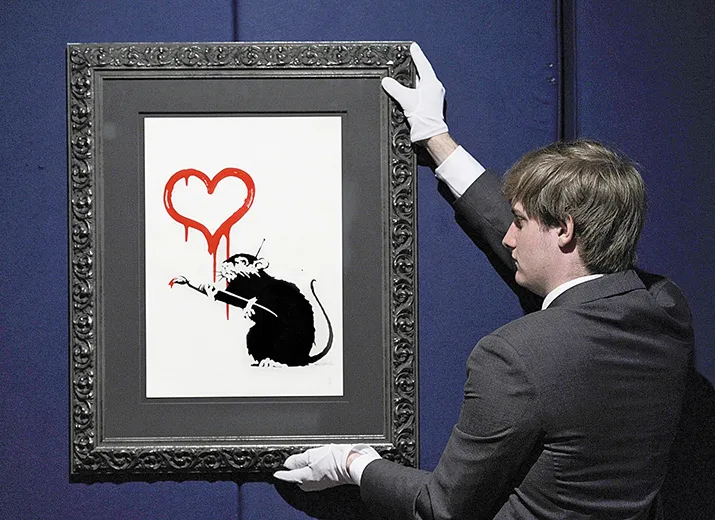
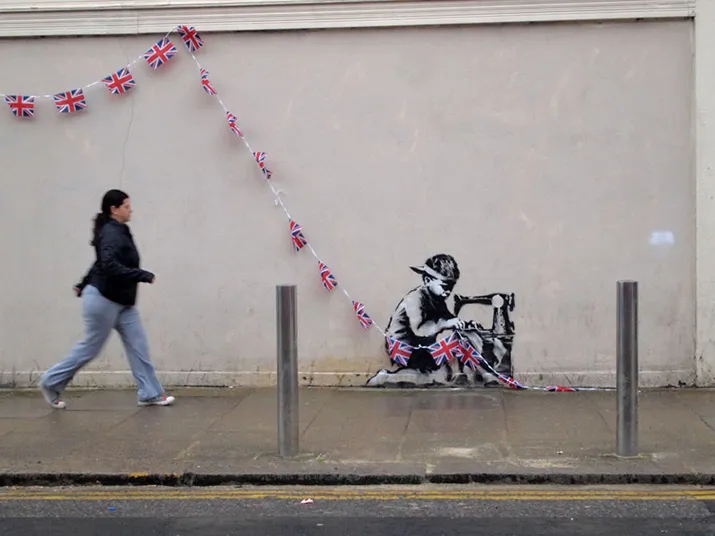
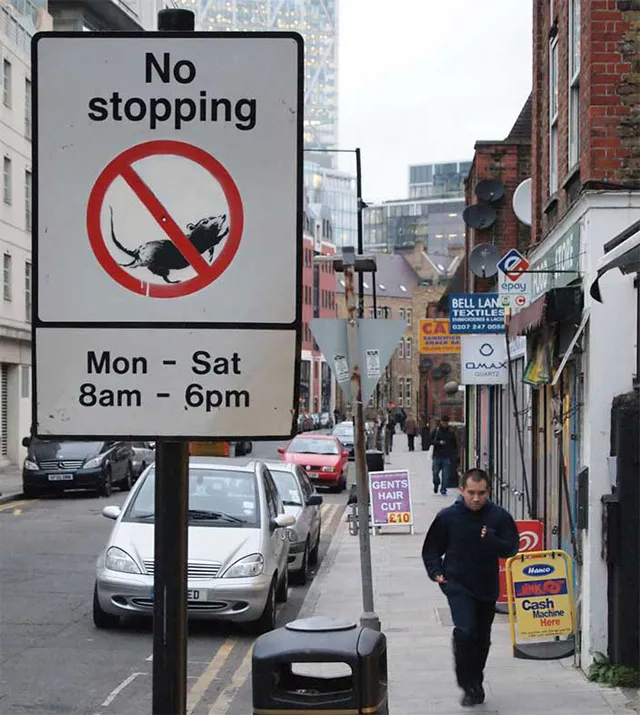
The people—and the apes and rats—he drew in these early days have a strange, primitive feel to them. My favorite is a piece that greets you when you lot enter the Pierced Up tattoo parlor in Bristol. The wall painting depicts giant wasps (with television set sets strapped on as additional weapons) divebombing a tempting bunch of flowers in a vase. Parlor managing director Maryanne Kemp recalls Banksy's marathon painting session: "Information technology was an all-nighter."
Past 1999, he was headed to London. He was also outset to retreat into anonymity. Evading the government was i explanation—Banksy "has problems with the cops." But he as well discovered that anonymity created its own invaluable buzz. Equally his street art appeared in cities across Britain, comparisons to Jean-Michel Basquiat and Keith Haring began circulating.
Banksy's beginning London exhibition, so to speak, took place in Rivington Street in 2001, when he and fellow street artists convened in a tunnel well-nigh a pub. "We hung up some decorators' signs nicked off a building site," he later wrote, "and painted the walls white wearing overalls. Nosotros got the artwork up in 25 minutes and held an opening political party later that week with beers and some hip-hop pumping out of the back of a Transit van. About 500 people turned up to an opening which had toll virtually nothing to gear up."
In July 2003, Banksy mounted "Turf War," his breakthrough exhibition. Staged in a quondam warehouse in Hackney, the show dazzled the London art scene with its carnival-atmosphere display, which featured a live heifer, its hide embellished with a portrait of Andy Warhol, equally well as Queen Elizabeth Ii in the guise of a chimpanzee.
Late that year, a alpine, bearded effigy in a dark overcoat, scarf and floppy hat strolled into Tate Britain clutching a big paper bag. He made his way to Room 7 on the 2nd level. He then dug out his ain picture, an unsigned oil painting of a rural scene he had found in a London street market place. Across the sail, which he had titled Crimewatch United kingdom of great britain and northern ireland Has Ruined the Countryside for All of U.s.a., he had stenciled bluish-and-white police law-breaking-scene tape.
During the side by side 17 months, e'er in disguise, Banksy brought his ain brand of prankster performance art to major museums, including the Louvre. At that place, he succeeded in installing an image of the Mona Lisa plastered with a smiley-face sticker. In New York City, he surreptitiously attached a small portrait of a adult female (which he had found and modified to draw the subject wearing a gas mask) to a wall in the Metropolitan Museum of Art. The museum took it in footstep: "I call up it's fair to say," spokeswoman Elyse Topalian told theNew York Times, "it would have more than a piece of Scotch record to get a work of art into the Met."
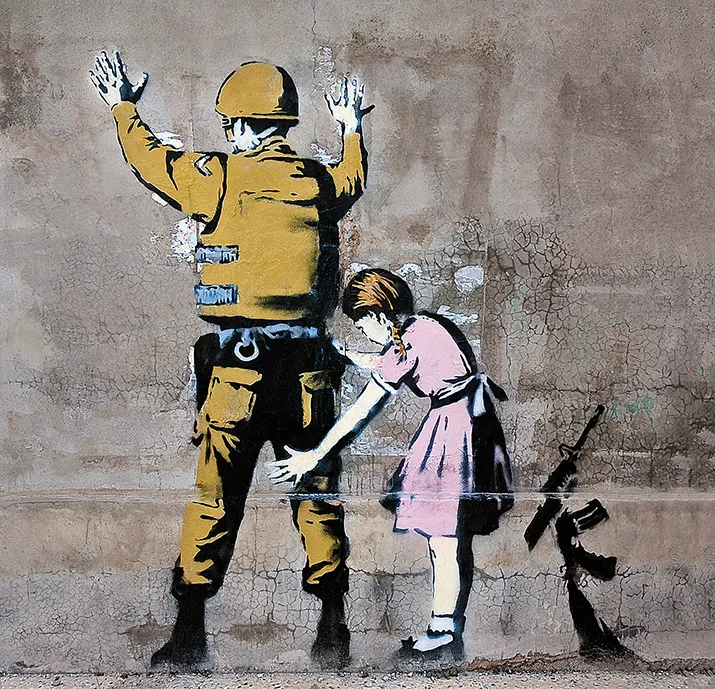
Banksy became an international star in 2005. In Baronial, he arrived in Israel, where he painted a series of images on the W Bank'southward concrete wall, part of the bulwark built to endeavor to stop suicide bombers. Images of a girl clutching balloons as she is transported to the superlative of a wall; 2 stenciled children with saucepan and spade dreaming of a beach; and a boy with a ladder propped against the wall were poignant meditations on the theme of escape.
Two months afterward returning from Israel, Banksy'southward London exhibition "Crude Oils" took the fine art of the subversive mash-up to new heights—Claude Monet'sWater Lilies reworked to include trash and shopping carts floating amidst lily pads; a street hooligan bang-up the window depicted in a reimagining of Edward Hopper'southward Nighttime Hawks. A signature Banksy bear upon included 164 rats—live rats—skittering around the gallery and testing critics' mettle.
At that place was an inevitability to Banksy's incursion into Los Angeles with the show "Barely Legal" in September 2006. "Hollywood," he once said, "is a town where they accolade their heroes by writing their names on the pavement to be walked on by fat people and peed on by dogs. It seemed similar a swell place to come and exist ambitious." Crowds of xxx,000 or then, among them Brad Pitt, were in attendance. "[Banksy] does all this and he stays anonymous," Pitt told theLA Times, almost wistfully. "I call up that'southward keen."
The exhibition centerpiece was an eight,000-pound alive elephant, slathered in red pigment and overlaid with a fleur-de-lis design. L.A.'due south outspoken animal-rights advocates were incensed; the regime ordered the paint to exist washed off. Fliers distributed to the glittering crowd made the signal that "At that place's an elephant in the room...twenty billion people live below the poverty line."
In February 2008, seven months before the collapse of Lehman Brothers, New York's rich and famous gathered at Sotheby's for a night of serious spending. The event, organized by Bono, artist Damien Hirst, Sotheby'southward and the Gagosian Gallery, turned out to be the biggest charity art auction ever, raising $42.5 million to support AIDS programs in Africa.
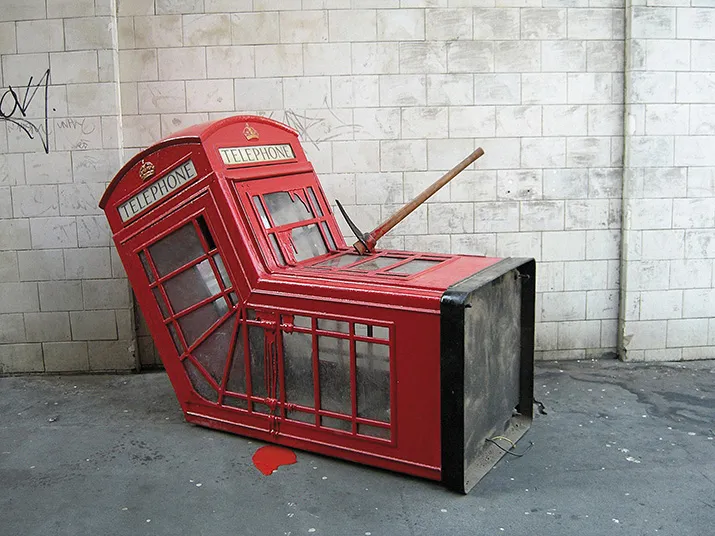
Banksy'sRuined Landscape, a pastoral scene with the slogan "This is not a photo opportunity" pasted beyond information technology, sold for $385,000.A Vandalized Phone Box, an actual British phone berth bent well-nigh 90 degrees and bleeding red paint where a optionax had pierced it, allowable $605,000. Three years later the heir-apparent was revealed to be Mark Getty, grandson of J. Paul Getty.
Banksy took on the medium of film inExit Through the Gift Shop, an antic, sideways 2010 documentary on the cosmos and marketing of street fine art. TheNew York Times described it equally paralleling Banksy'southward all-time work: "a trompe l'oeil: a film that looks like a documentary but feels like a monumental con." Information technology was brusque-listed for an Oscar in the 2010 documentary category.
When the Museum of Contemporary Art, Los Angeles put on its comprehensive survey of street art and graffiti in 2011, Banksy was well represented in the field of 50 artists. The show was a high-profile demonstration of the miracle that has come to be known as the "Banksy outcome"—the creative person'south astounding success in bringing urban, outsider fine art into the cultural, and increasingly profitable, mainstream.
Information technology could exist said that Banksy's subversiveness diminishes as his prices rise. He may well accept reached the tipping point where his success makes it incommunicable for him to remain rooted in the subculture he emerged from.
The riots in the Stokes Croft expanse of Bristol in spring 2011 offering a cautionary tale. The episode began subsequently police raided protesters, who were opposed to the opening of a Tesco Metro supermarket and living as squatters in a nearby apartment. The authorities later said that they took action afterward receiving information that the grouping was making petrol bombs. Banksy'due south response was to produce a £5 "commemorative souvenir affiche" of a "Tesco Value Petrol Bomb," its fuse debark. The gain, he stated on his website, were to become to the People'southward Commonwealth of Stokes Croft, a neighborhood-revival organization. Banksy's generosity was non universally welcomed. Critics denounced the artist equally a "Champagne Socialist."
He has countered this kind of charge repeatedly, for instance, telling theNew Yorker by e-mail: "I requite away thousands of paintings for gratuitous. I don't recall it's possible to make art near world poverty and trouser all the cash." (On his website, he provides high-resolution images of his work for free downloading.)
The irony, he added, that his anti-establishment fine art commands huge prices isn't lost on him. "I love the way commercialism finds a place—even for its enemies. It's definitely boom time in the discontent industry. I hateful how many cakes does Michael Moore become through?"
While the value of his pieces soars, a poignancy attends some of Banksy's artistic output. A number of his works exist simply in memory, or photographs. When I recently wandered in London, searching for 52 previously documented examples of Banksy'southward street art, 40 works had disappeared altogether, whitewashed over or destroyed.
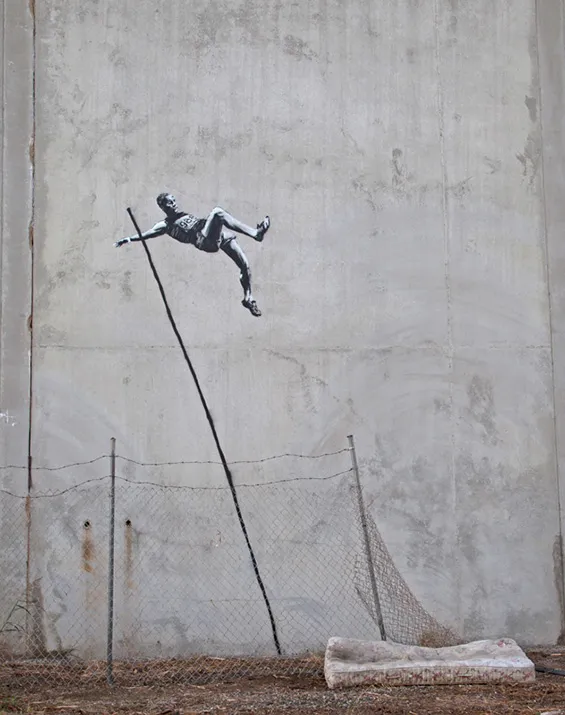
Fittingly, the latest affiliate in the enigmatic Banksy's saga involves an unsolved mystery. This summertime, during the London Games, he posted two images of Olympic-themed pieces online—a javelin thrower lobbing a missile, and a pole vaulter soaring over a spinous-wire argue. Naturally, a Banksyan twist occurs: The locations of this street art remain undisclosed. Somewhere in London, a pair of new Banksys await discovery.
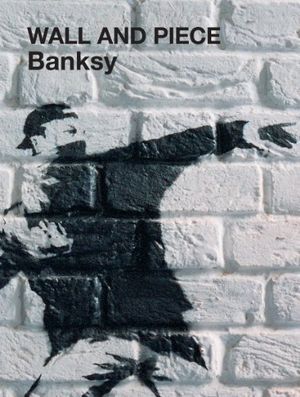
Wall and Piece
Banksy.: You Are an Acceptable Level of Threat
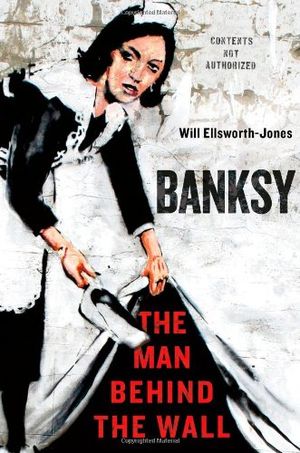
Banksy: The Human Behind the Wall
Source: https://www.smithsonianmag.com/arts-culture/the-story-behind-banksy-4310304/
/https://tf-cmsv2-smithsonianmag-media.s3.amazonaws.com/filer/The-Story-Behind-Banksy-2.jpg&description=Bansky: an Artist With a Message Reading Plus Answers)
Post a Comment for "Bansky: an Artist With a Message Reading Plus Answers"