Grub Error Attempting to Read or Write Outside of Partition Manjaro
Solving the trouble with 'mistake: attempt to read or write outside of disk "hd0″'
After installing Linux at the first boot you may encounter the error mentioned in the discipline.
To understand the reason, literally a couple of words about the boot process. It all starts with the fact that the BIOS initializes the devices, including hard drives; afterward that, the BIOS transmits control to the GRUB booter, indicating the place on the disk where it should read the configuration file and other files necessary for it.
BIOS is a rather old invention and it has a number of limitations. For case, no BIOS is able to work with disks over 2 terabytes. Therefore, if you installed the organization on such a disk, then it is quite possible that the BIOS will not cope with loading the operating system.
But this is not all – some BIOSes has especially poor pattern – they cannot point Chow to files that are too far from the beginning of the deejay – not necessarily across 2 Terabytes, perhaps much closer.
How is the recording on the disc performed
This seems counterintuitive, simply the information is non recorded to the disk sequentially – that is, if x% of the deejay space is occupied, this does not mean that the start x% are occupied – the information can be scattered randomly. Smart disks specifically record information in different areas – so that the disc degrades evenly.
Therefore, when yous install the operating arrangement, the /kicking folder can exist anywhere — even at the end of the disk.
error: endeavour to read or write exterior of disk «hd0″
So, as a result of the confluence of a number of circumstances:
- BIOS is used (non EFI)
- big disk size
- poor BIOS blueprint
- folder /kick is written too far from the first of the deejay
can get the mistake:
fault: endeavour to read or write outside of disk «hd0″
From that facts the conclusions follow:
- when installing on the same disk, the error may or may not occur (depending on the location of the /boot binder on the disk)
- Reinstalling Grub, which is advised on some websites, may or may not help - again, depending on where the /kick binder is overwritten
- if your computer supports EFI, and so you will never encounter this error
- the problem disk may well kicking on another computer (at that place are nuances - on some other computer there may be EFI or too poorly designed BIOS)
And the nearly important conclusion – if the /kick folder is written to a dissever division and the partition is located at the beginning of the disk, then this will almost certainly solve the problem.
How to put the /kick folder on a separate section.
I will evidence the example of Debian and derivatives (Kali Linux, for example). With other distributions, the deportment are similar – but you need to look in accelerate for information on how to put the /boot folder in a dissever section during the installation process.
I would especially note that if your computer supports EFI (and this is the majority of computers manufactured in the last 8-x years), and then you will not encounter this problem and you practice not demand to worry.
Then, at the start of the installation is performed as usual.
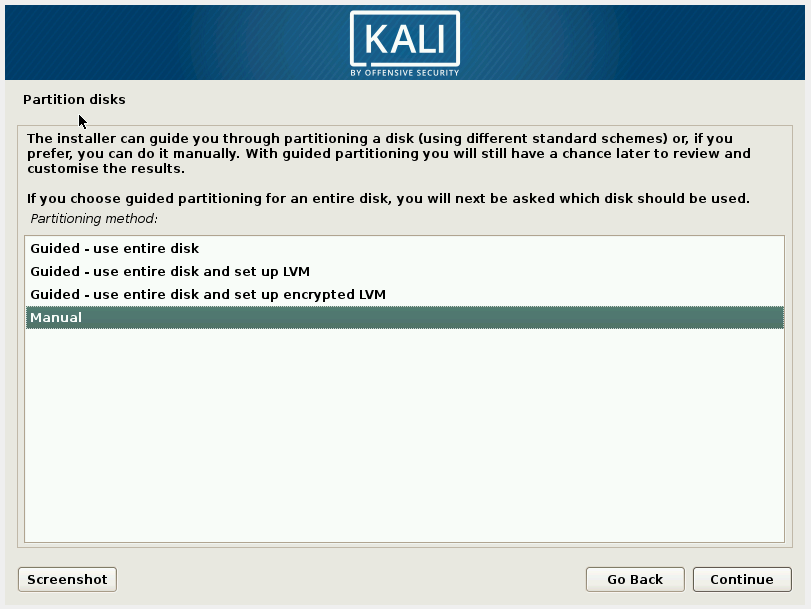
Then, when you become to the deejay layout – select 'Manual':
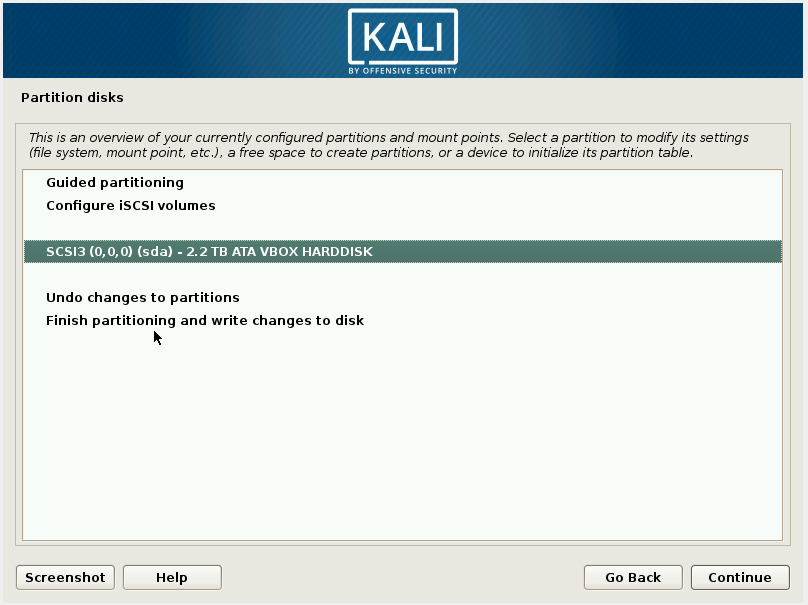
Select the disk to partition:
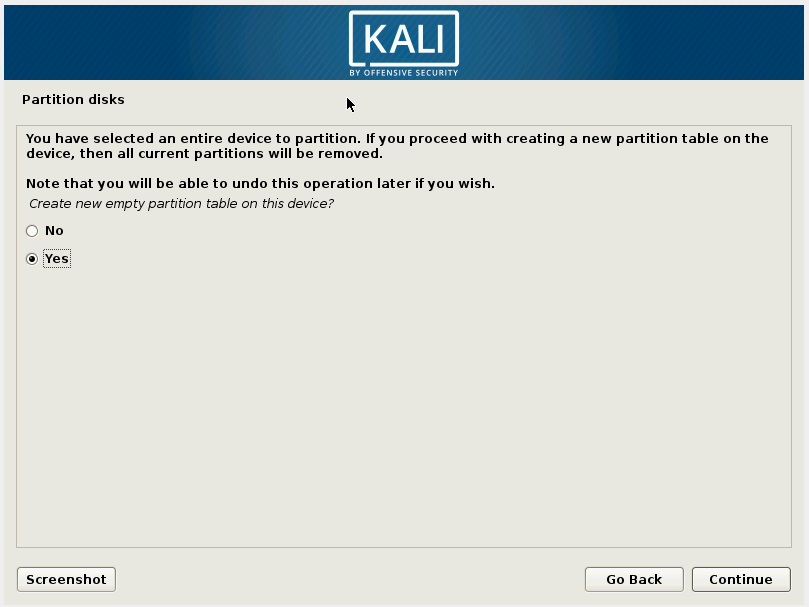
Choose Yes:
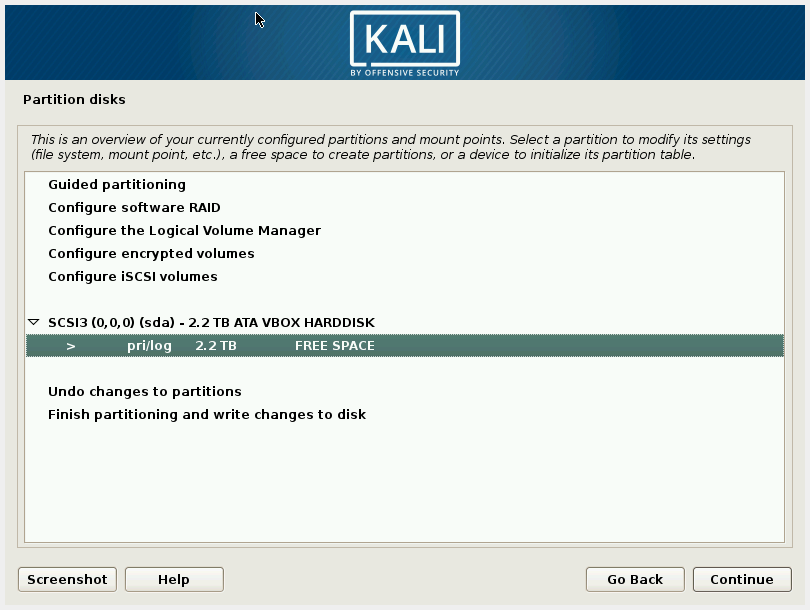
Select FREE Infinite:
Create a new partition:
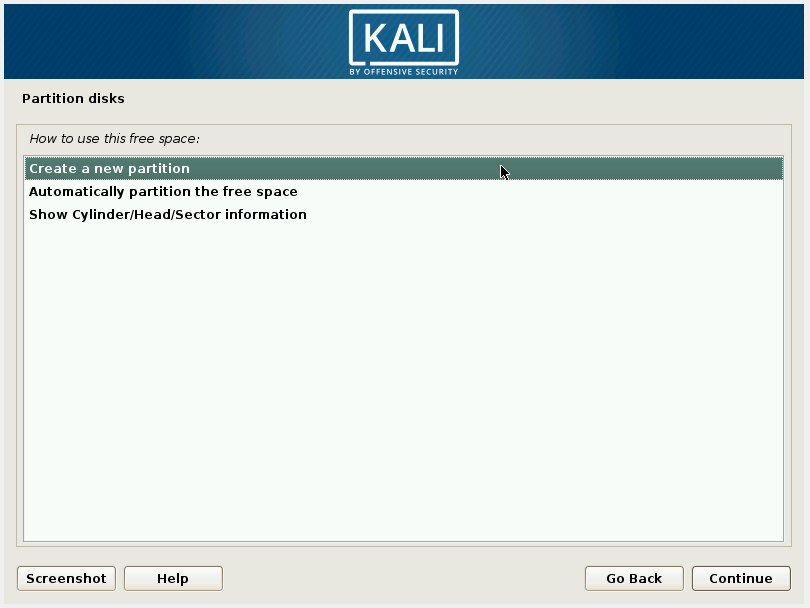
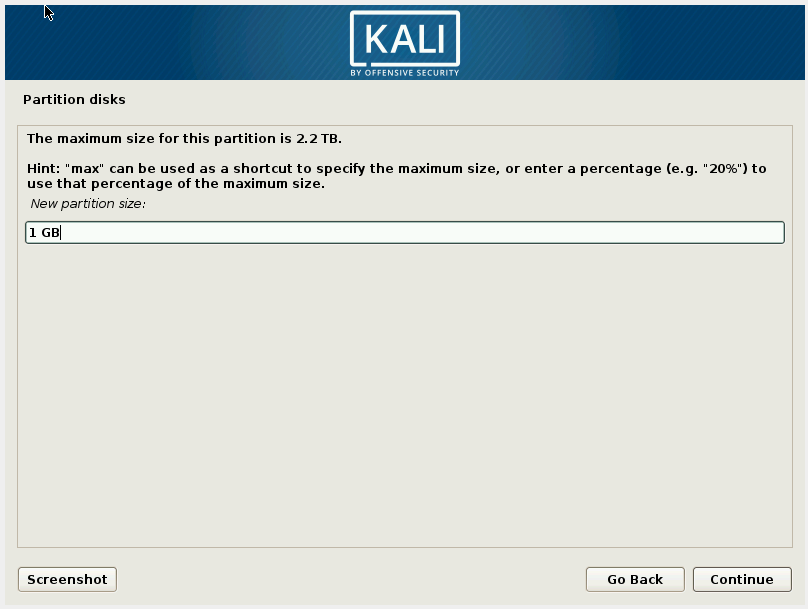
We do not very big size – 1 Gigabyte is enough for more than. In fact, less than 100 megabytes will be used. In whatever example it is better to allocate more than 200 megabytes:
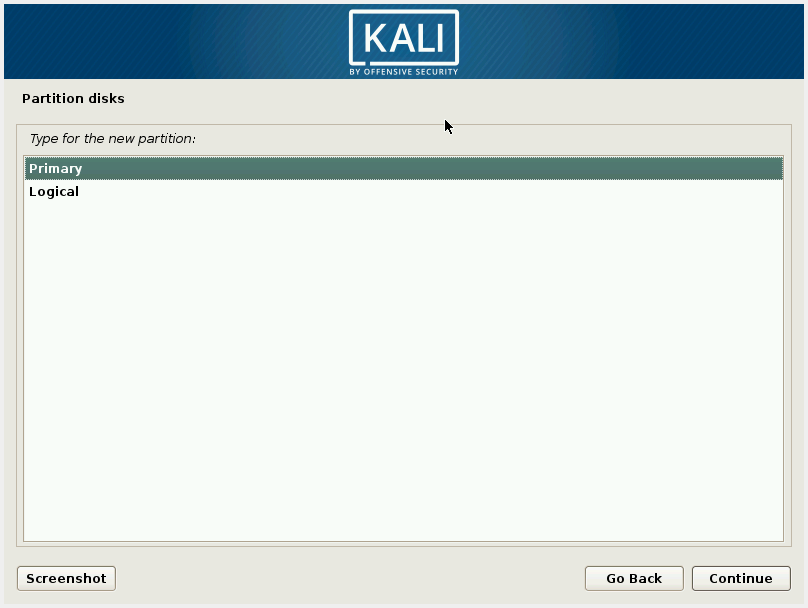
Primary:
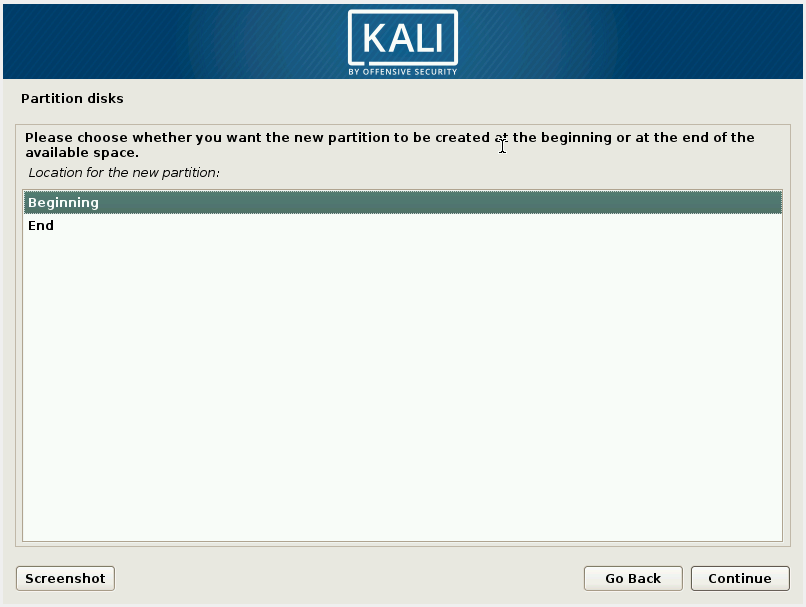
Be sure to select 'Beginning' - otherwise everything what we do now is meaningless:
Go to Mount Bespeak:
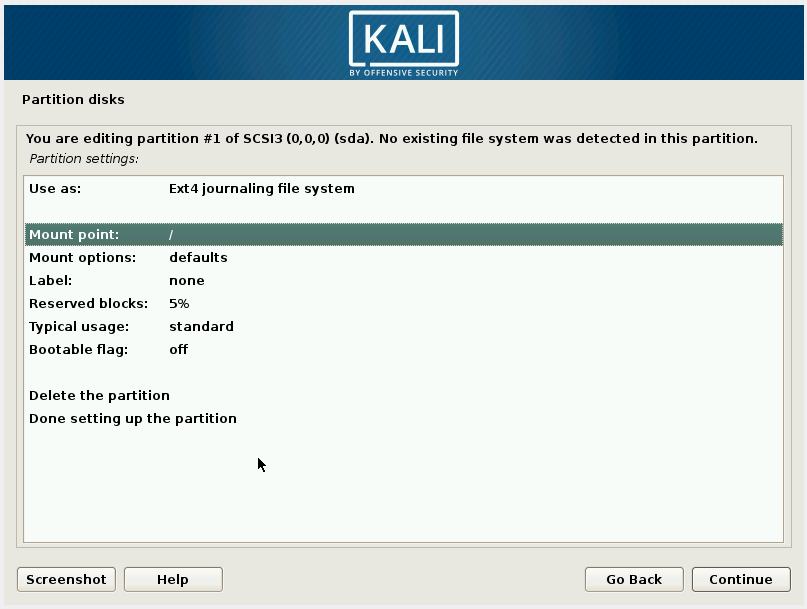
Select /kick - static files of the boot loader:
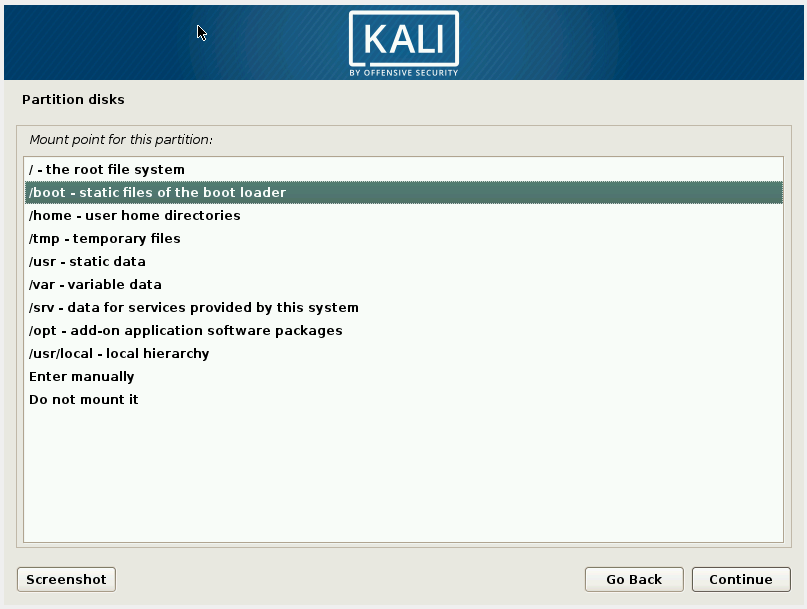
Gear up Bootable flag to on. Select Done setting up the partition:
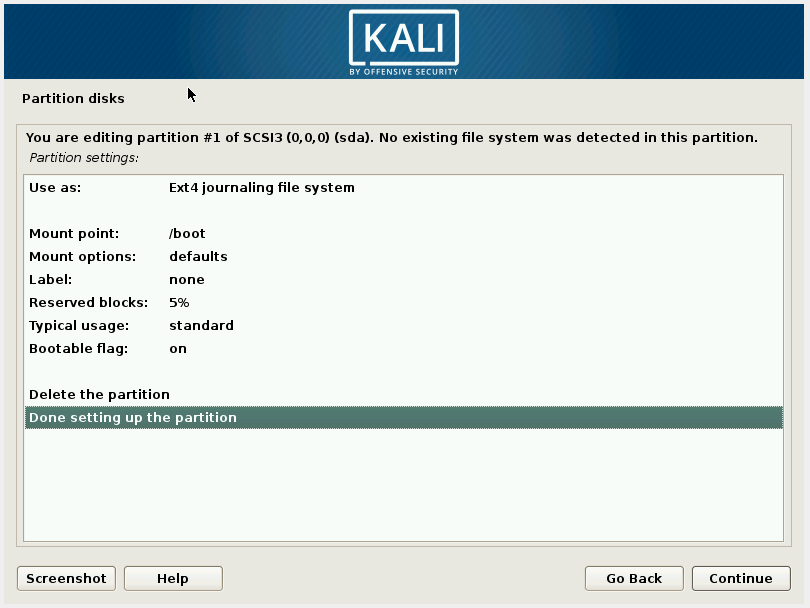
Now become to the FREE Infinite and create another section:

Farther, every bit with the first sectionalisation – set the size. Select a logical partitioning.
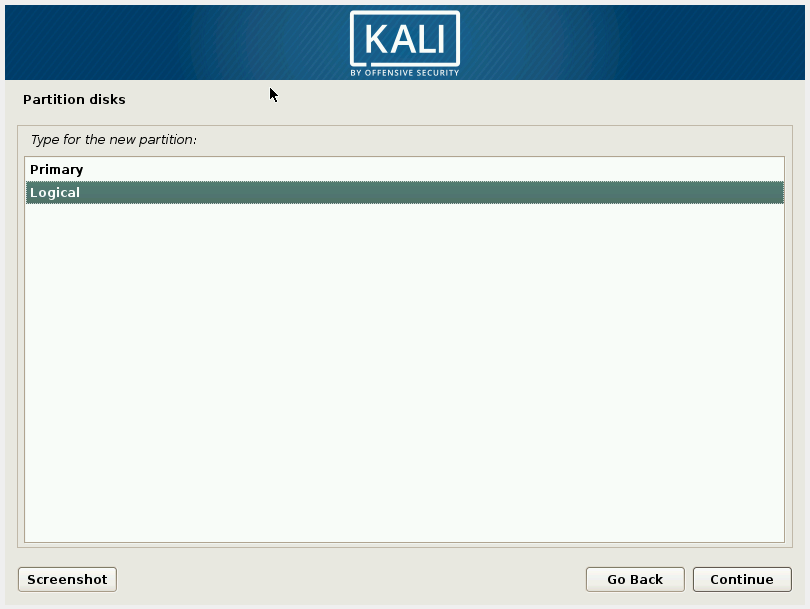
The mount point should be / - this character means the root filesystem:
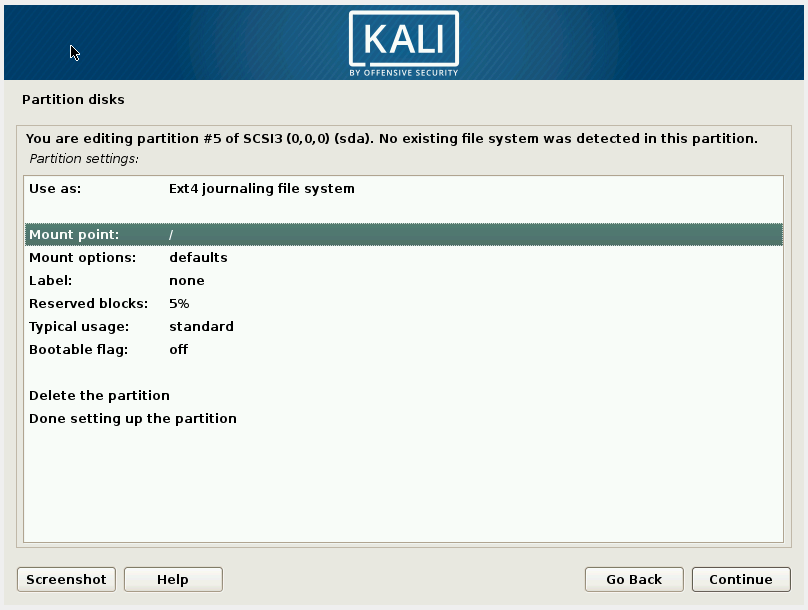
Nosotros get:
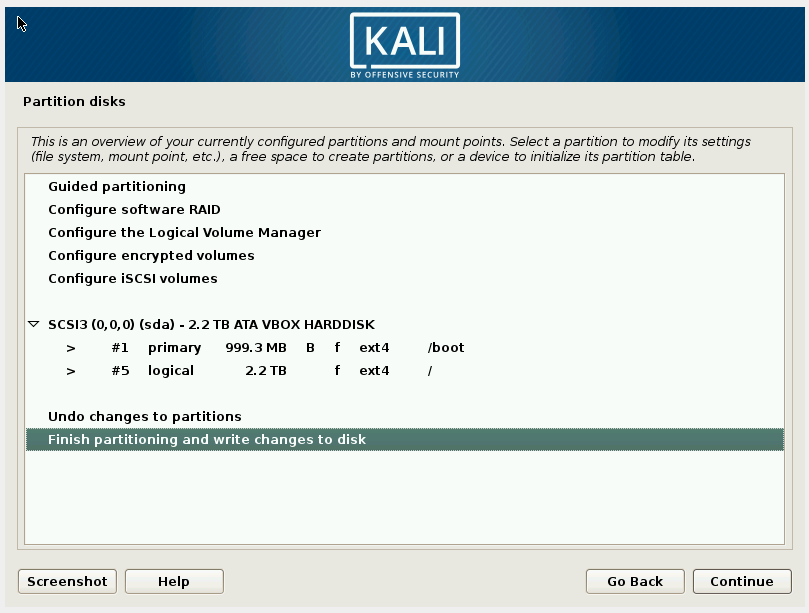
Past the manner, for the main division you tin can apply not all the free space - you lot can save space on the disk for other needs. You can also allocate 10 Gigabytes for Swap partition – swap area (used when in that location is not plenty RAM). To practise this, when you lot fix the backdrop of the deejay, select 'Use as', and there select the 'swap area'.
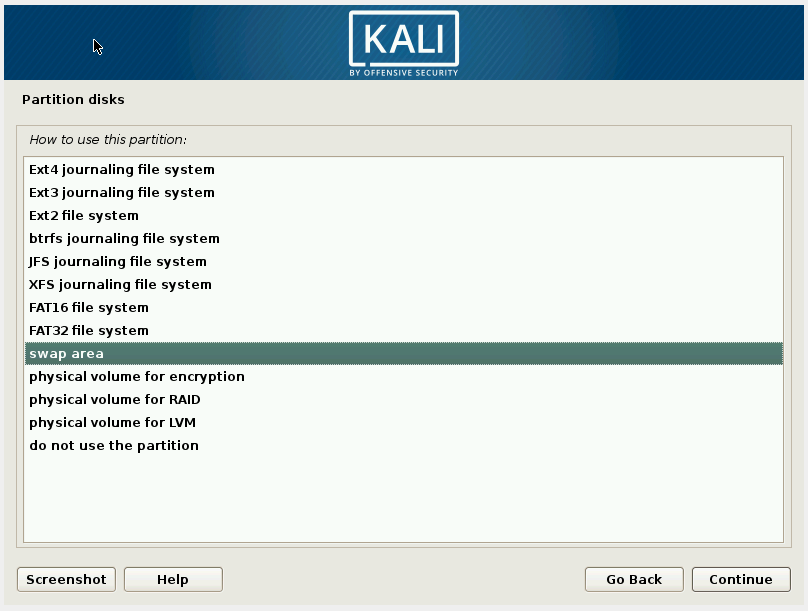
Adjacent, the installation of the operating system once more continues as usual.
Conclusion
The problem can arise both with an internal hard drive, and with an external USB drive. The problem may arise suddenly – even on a deejay that previously worked fine – it's all about "luck" - where exactly the /boot folder will be written. The method shown in this article volition allow you not to rely on luck, merely to completely prevent this problem.
Past the style, if you've got into manual disk partitioning anyway, it is recommended to create some other partition and select it to mount the /home folder. The result will exist that the arrangement volition be on one sectionalization, and the /home folder, in which user files are located, on another. Therefore, the adjacent fourth dimension you reinstall the operating system, the files in the /home folder will not be deleted (unless you do this manually). And you tin re-connect this sectionalisation to mount as /home. That is, information technology turns out that you have a new system, and all user files are in the same place equally earlier the reinstallation.
Source: https://miloserdov.org/?p=2420

Post a Comment for "Grub Error Attempting to Read or Write Outside of Partition Manjaro"